Brand Activation Logistics: What Brand and Experiential Agencies Need to Plan
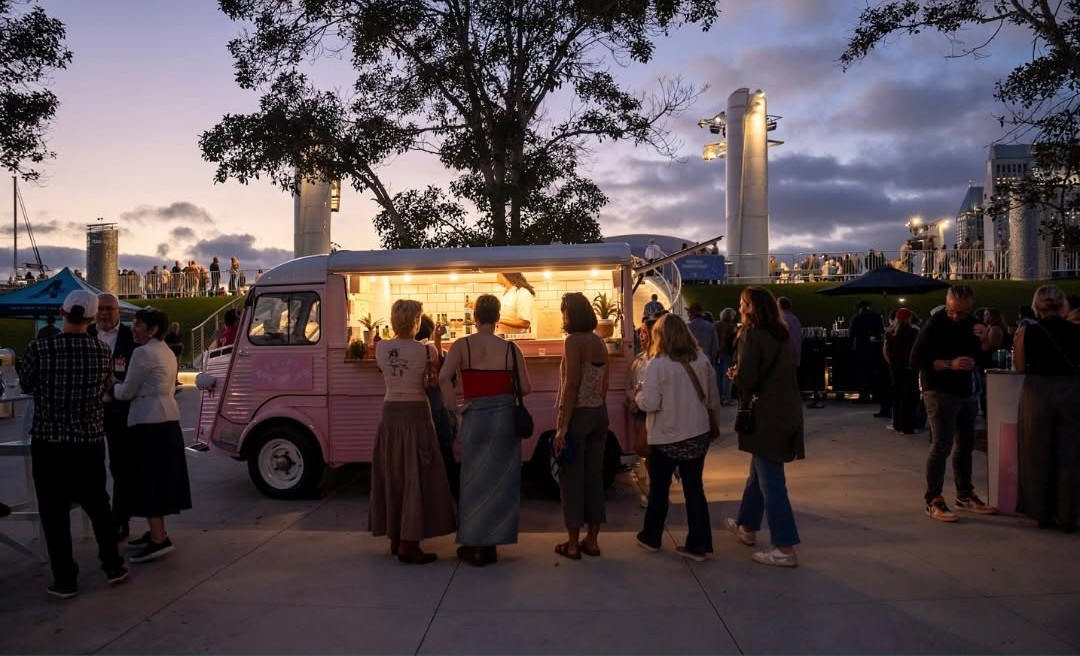
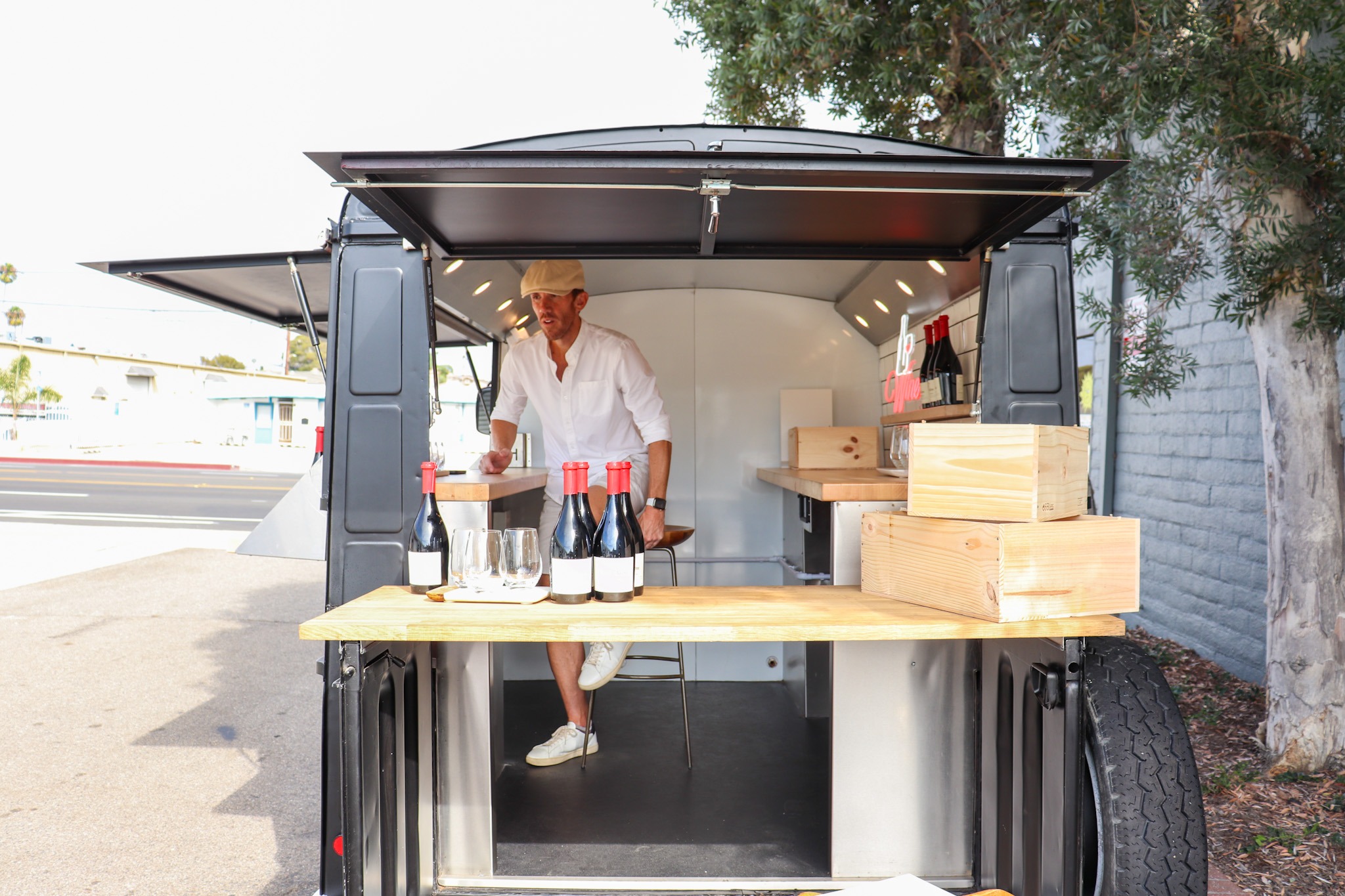
The Lo-Fi Spritz Van welcomes guests at The Rady Shell in San Diego, demonstrating how thoughtful planning brings a branded mobile experience to life.
Producing a mobile brand activation requires planning across at least six operational areas before event day: creative design and vehicle wrap production, transportation and routing, power and product requirements, venue access and load-in logistics, insurance and compliance, and onsite operations. Each area affects how the experience is ultimately configured, and the ones that are not resolved before production locks become the hardest to solve on event day.
Most of that work should be invisible to the audience. The vehicle should look right, arrive ready and operate as planned. Getting there starts well before event day.
Learn more about our Lo-Fi Spritz van at The Rady Shell
How Do You Design a Wrap for a Vintage Vehicle Brand Activation
Custom branding presents production considerations that standard format advertising does not. A vehicle wrap has to work across doors, hinges, panel breaks, windows and other functional elements. On a vintage vehicle like the Citroën HY, those details have direct impact on logo placement, typography and detailed artwork and they are easier to account for at the design stage than after artwork has gone into production.
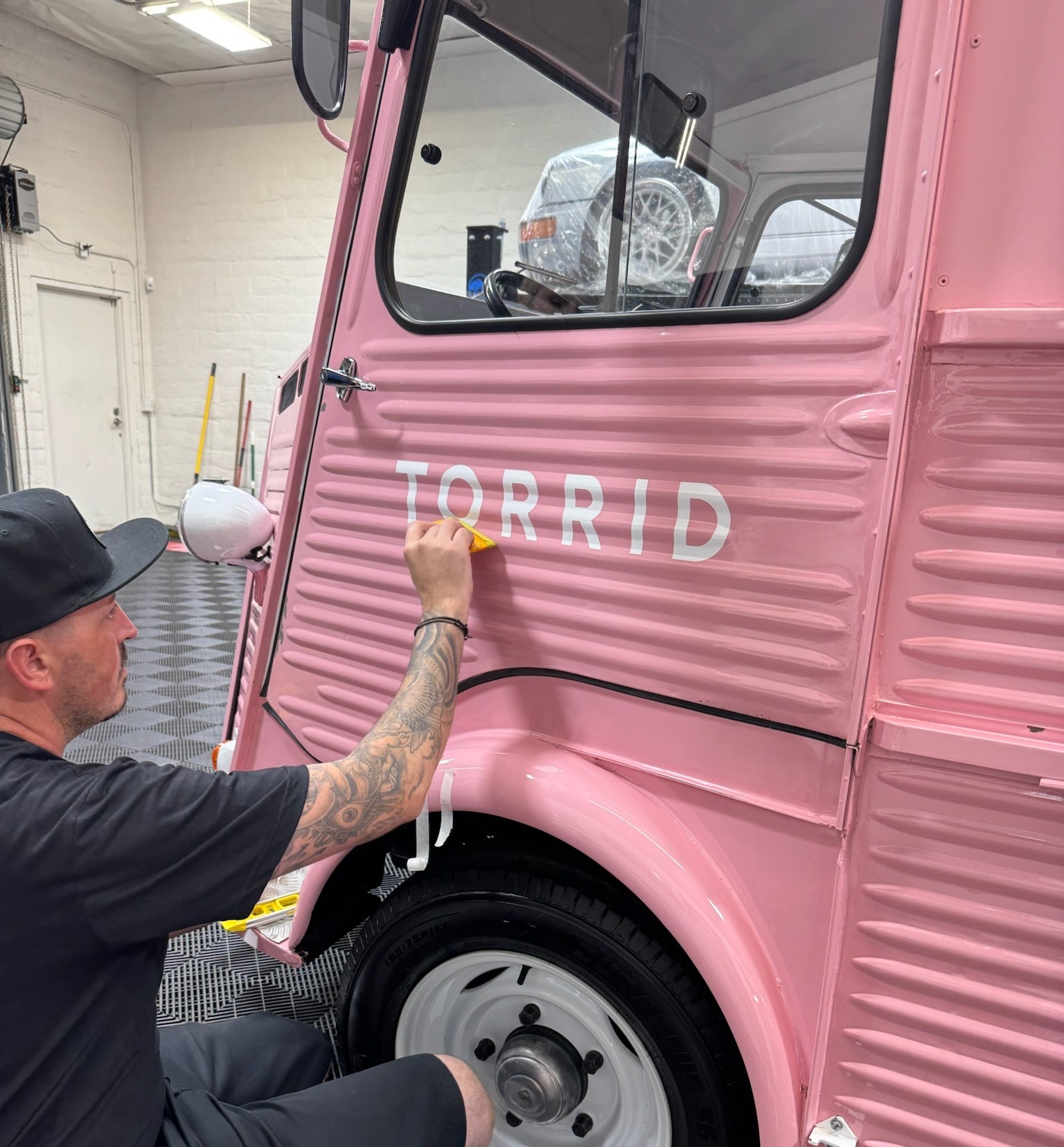
Those physical characteristics can also create creative opportunities.
For a Bloom Nutrition activation, we placed the campaign message “hope you’re well” on the rear window of the Citroën. When the window was raised, sunlight projected the message onto the ground below, creating an unexpected extension of the branding for guests to discover. The vehicle became part of the creative experience rather than simply a surface for branding.
Read more about our Bloom Nutrition Coachella 2025 activation.
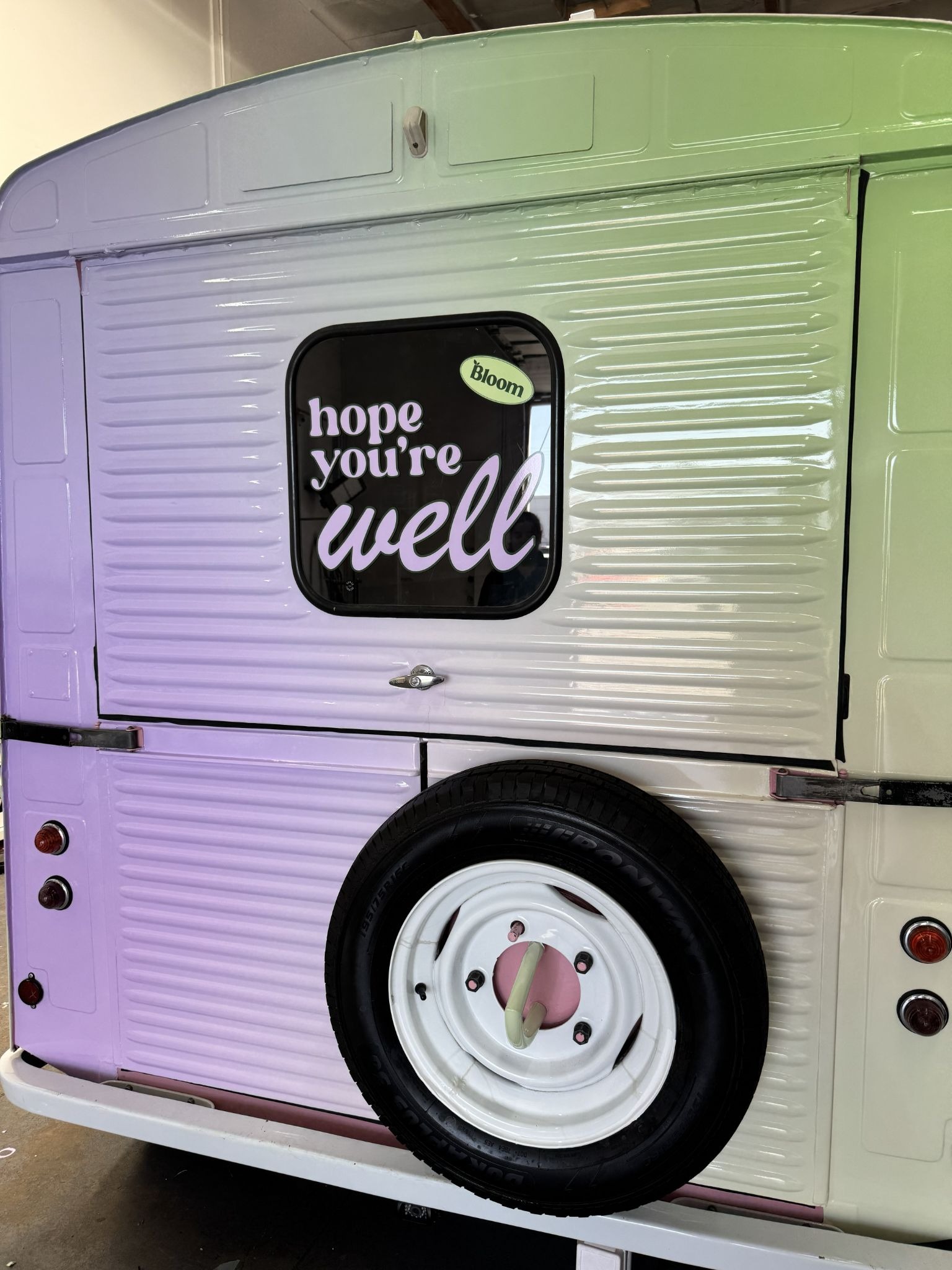
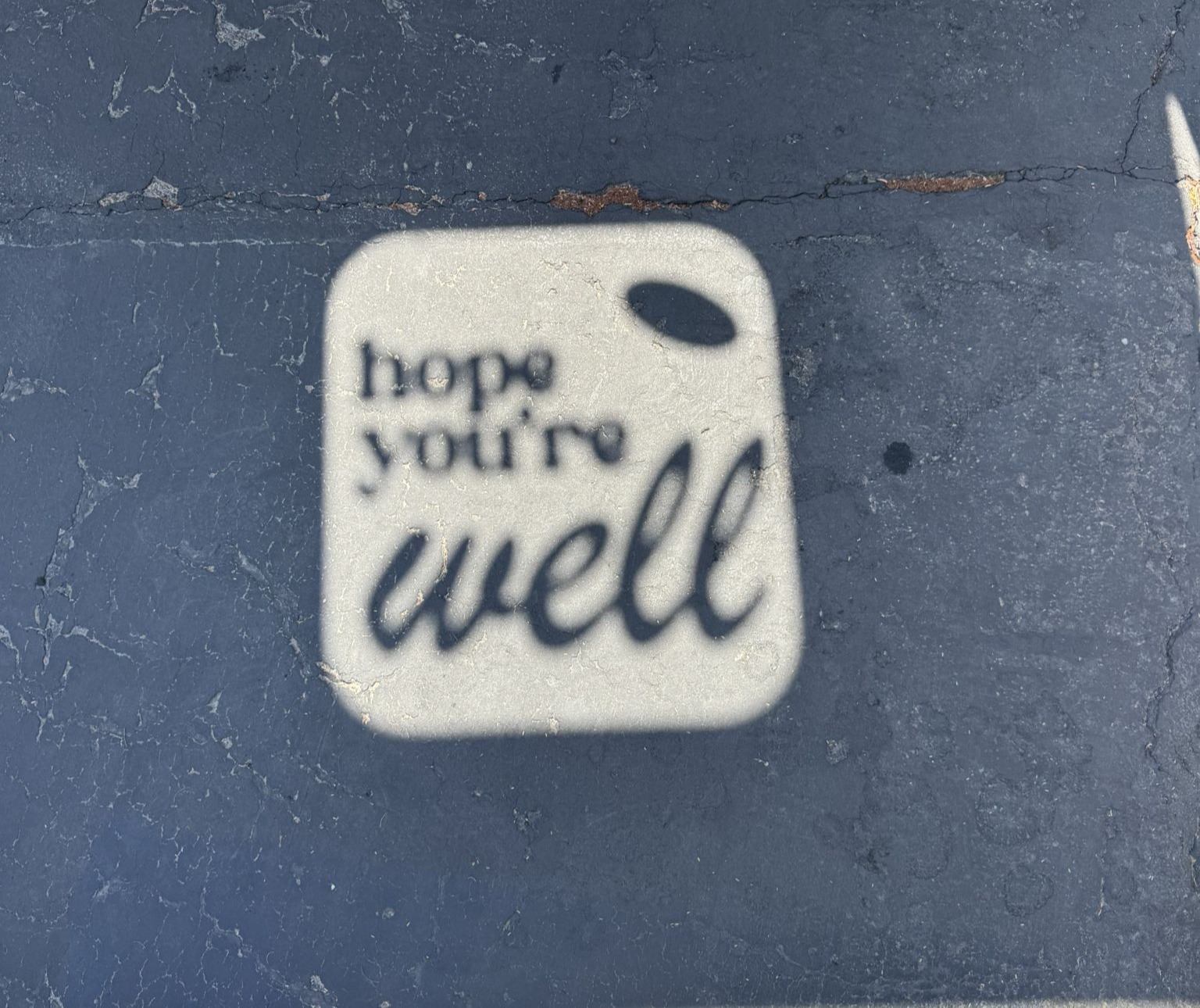
Small details like this can turn the vehicle itself into part of the creative experience rather than simply a surface for branding.
Retro Roll provides vehicle templates and specifications to support the design process and can work directly with brand and agency creative teams before artwork moves into production.
Dana Mack, Retro Roll Principal & Creative Director, shares practical guidance on logo placement, panel breaks, functional elements, legibility and designing a custom wrap for a vintage vehicle.
Considering these details early can reduce revisions while also creating opportunities to use the character of the vehicle in ways that make the activation more memorable.
How Do You Handle Transportation for a Mobile Brand Activation
Mobile activations do not require every movement to happen under the vehicle's own power.
For a San Diego activation, the client wanted the Citroën HY vans to be seen driving as part of the campaign. Some of the planned stops, however, were approximately 40 miles apart.
The creative requirement and the transportation requirement were different problems that needed different solutions.
A vintage three-speed Citroën can be driven for the right moments, including short staged movements when driving footage is part of the creative. Longer production moves between distant locations are often better handled by flatbed or other dedicated transport, depending on schedule and location.
Retro Roll plans transportation based on distance, schedule, geography and the requirements of the activation.
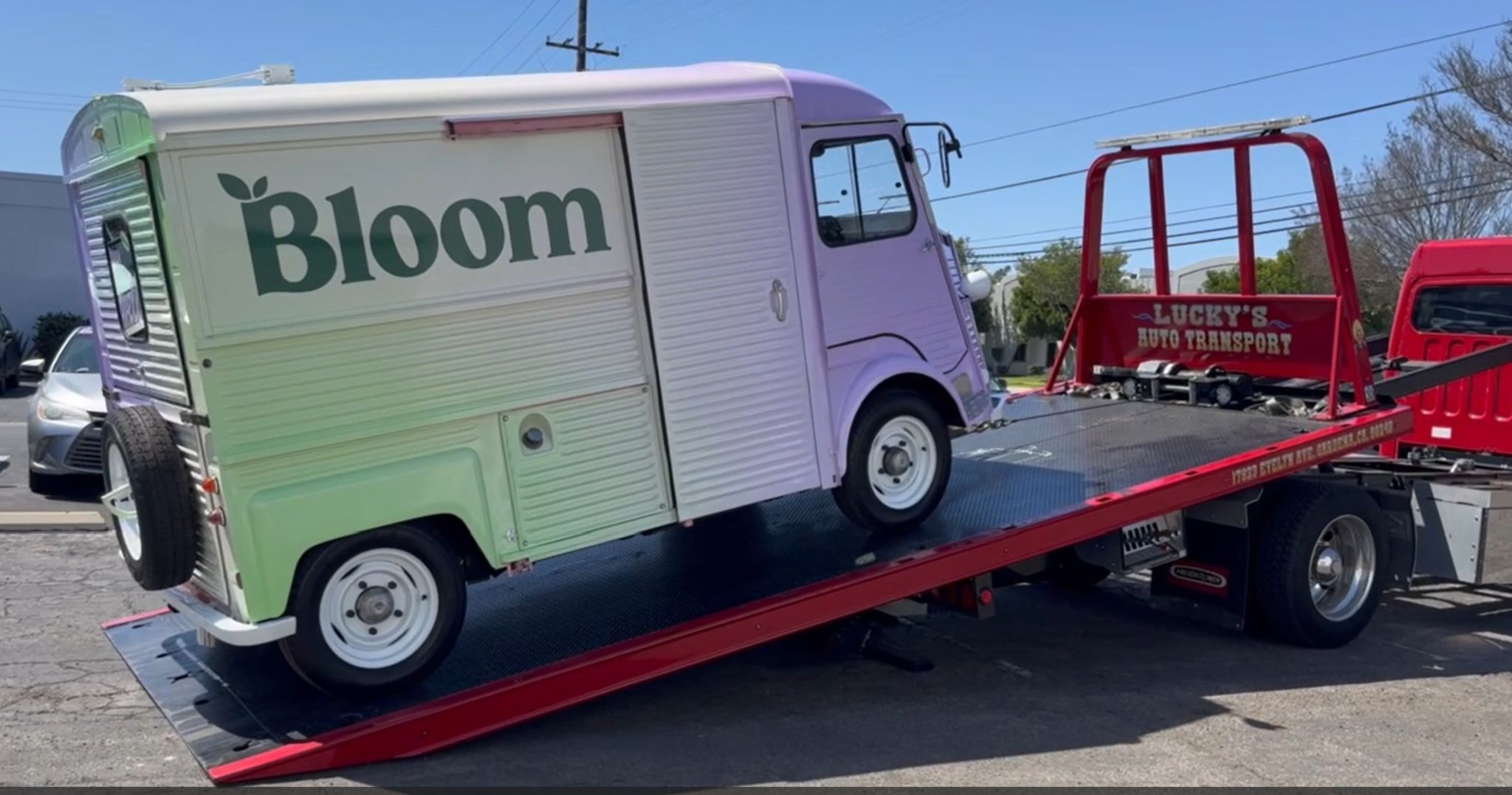
For the agency and client, the objective is straightforward: have the vehicle in position, on schedule and ready for the experience it was designed to deliver.
How Do You Plan a Multi-Location Mobile Activation
Mobility creates options and the ability to change locations mid-campaign is genuinely valuable. What changes become more complicated once locations and logistics are confirmed.
During the Banila Co activation at Coachella 2026, the brand considered changing some of the hotel stops after locations had already been secured.
Those locations were connected to more than the route. Commitments had been made with the properties, and the hotels were part of the broader audience strategy, including social reach those venues could extend through their own channels. La Serena Villas alone posted to their 26,000-follower feed both activation days, unprompted, delivering 52,000 potential impressions from a single partner placement.
Retro Roll and the experiential agency could have adjusted the plan, but adjusting it would have meant restructuring their commitments that were already driving value beyond the physical location.
For mult-location campaigns, the ability to change locations is a planning asset. It’s cost such as the impact on routing, venue commitments, staffing, transportation and other parts of the production should be considered before making the change.
Read the full Banila Co x Retro Roll Coachella activation recap
How Do You Manage Power and Product Logistics for a Mobile Activation?
During Coachella 2026, Retro Roll's role with Banila Co expanded beyond supplying and operating two branded Citroën HY vans.
When securing the planned activation locations became challenging, Retro Roll helped develop an alternative approach built around boutique hotels and high-volume festival shuttle stops.
The hotel activations brought the experience directly to guests poolside, while the shuttle location created an opportunity to reach a larger concentration of festival-goers moving through the valley. Retro Roll supported hotel outreach, location planning and routing in addition to providing the vehicles.
The campaign also called for frozen product sampling from the vans during a weekend when temperatures reached approximately 105 degrees.
Delivering that experience required planning beyond the vehicles themselves. Refrigeration equipment had to fit within the available space and power requirements. Product needed to be prepared in a clean environment, cooled for transport, stored appropriately and replenished throughout the activation. A support vehicle carried additional inventory and serving supplies.
For agency producers, these considerations are easiest to address before the activation plan is locked. Equipment dimensions, power draw, storage, replenishment logistics and support vehicles can all influence how the mobile experience is configured and discovering any of them on event day creates problems that are expensive to solve in real time.
What Venue and Vehicle Requirements Do Agencies Need to Account For?
Transportation is only one part of getting a mobile platform onsite.
Venue access, load-in windows, parking, power and insurance requirements can all affect the production plan. Certificates of insurance may be required by venues or transportation partners, and vehicle operation needs to remain within the appropriate insurance and operating requirements.
These details become particularly important when a campaign involves multiple stops, restricted venue access or tight load-in and breakdown windows. They are also easier to solve during planning than on event day.
For agency producers, the practical questions to resolve before the production locks: who provides the certificate of insurance and to what limits, what are the load-in and breakdown windows at each location, is power accessible and at what voltage, and what are the parking and access requirements for a vehicle of this size?
What Should Agencies Look for in a Mobile Activation Production Partner
Brand and experiential agencies are already coordinating multiple partners across a production. A specialty vehicle shouldn't become another production to manage inside the larger one.
The scope of what Retro Roll handles depends on what the campaign requires and what the producer needs. Some activations center primarily on vehicle provision, branding, and on-site operation. Others require more coordination around the platform.
During Banila Co at Coachella, Retro Roll's role expanded into location planning and frozen product service because those were the areas where the activation needed support. On other campaigns, the work centers on branding, transportation logistics, and on-site vehicle operation. The Lo-Fi Aperitifs activation at the Rady Shell in San Diego is a strong example of a recurring series where the brief was tighter and where consistent, well-executed vehicle presence across multiple events created the compounding brand familiarity the campaign was built around.
The way we operate across all our events is: own the lane, anticipate the gaps, and make the mobile portion of the activation easier for the agency and producer to manage.
Planning a Mobile Brand Activation?
If you're a brand or experiential agency planning an activation in Southern California or beyond, tell us what you're building.
Share your dates, market, campaign objective and what you'd like the mobile platform to accomplish. We'll help determine where Retro Roll can fit and what pieces we can take off your plate.
FAQ
- How does Retro Roll design a vehicle wrap for a vintage van?
Start with the vehicle's templates and physical specifications before artwork is developed. On a vintage Citroën HY, corrugated body panels, door and hinge lines, windows, and functional elements all affect how artwork translates from design to installation. Retro Roll provides templates and can work directly with agency creative teams before production begins.
- What should agencies provide when beginning activation planning?
Dates, locations, campaign objectives, branding requirements and the intended role of the vehicle are a good starting point. From there, transportation, power, venue access, routing and other production requirements can be identified.
- Can a mobile activation move between multiple locations in one day?
Yes. Multi-stop campaigns can be supported when routing, transportation, setup requirements and timing are planned appropriately. Multi-stop campaigns require understanding what each location change costs in time, logistics, and venue commitments before flexibility is built into the plan.
- Can Retro Roll support food or beverage sampling?
Yes. Retro Roll has supported food and beverage service for specific campaigns, including frozen product sampling during Coachella. Requirements vary by activation and may include equipment, power, storage, preparation, replenishment and venue considerations.
- Does Retro Roll work with brand and experiential agencies?
Yes. Retro Roll works within agency-led productions as a specialized subcontractor, providing the vehicle and on-site operation, or supporting more of the mobile activation workstream, including location planning, transportation, logistics, and on-site execution, depending on what the campaign requires.
Related Articles
- Planning a Mobile Brand Activation in Southern California: What Agencies Need to Know
- What to Expect When You Rent a Citroën HY Van for a Brand Activation
- How Much Does It Cost to Rent a Vintage Citroën HY Van for a Brand Activation?
